
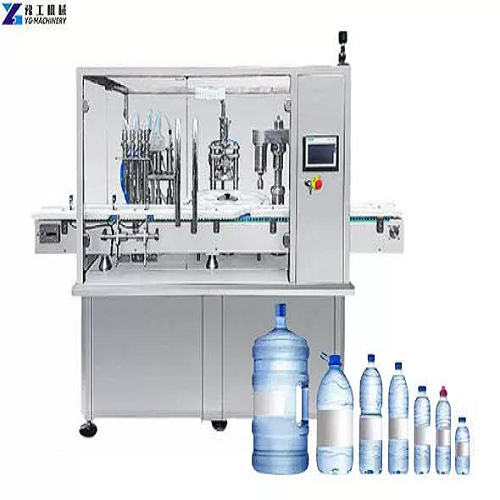
Semi Auto (24-30) BPM Bottle Filling & Capping Machine
A Bottle Filling Machine is a crucial piece of equipment in industries such as beverage, food, pharmaceutical, and chemical manufacturing. These machines are designed to fill bottles of various sizes with liquids, semi-liquids, or pastes efficiently and accurately. Bottle filling machines ensure that the right amount of product is dispensed into each container while maintaining hygiene and preventing contamination. Modern filling machines are highly automated, offering speed, precision, and reliability in large-scale production lines.
Filling machines come in various types and configurations depending on the product being filled, such as carbonated drinks, juices, water, sauces, oils, and pharmaceuticals. The design and operation of these machines can vary based on whether the filling process is for a liquid, powder, or paste, and the volume required for each container.
Types of Bottle Filling Machines:
Liquid Filling Machines:
These machines are used to fill bottles with liquids such as water, juices, oils, milk, and alcoholic beverages. There are different types of liquid filling machines, including:
Gravity Filling Machines: The liquid is dispensed into the bottle using the force of gravity. Suitable for low-viscosity liquids.
Vacuum Filling Machines: Used for filling bottles in a vacuum environment to prevent spillage and ensure precision. Ideal for carbonated drinks.
Piston Filling Machines: These machines use a piston to draw the liquid into a chamber and then push it into the bottle. They are ideal for higher viscosity liquids.
Pump Filling Machines: These use pumps to transfer the liquid into the bottles and are used for products with varying viscosity, like sauces and oils.
Powder Filling Machines:
Powder filling machines are designed to fill bottles with powdered products such as spices, detergents, or flour. These machines are usually equipped with auger fillers or volumetric cup fillers for precise dispensing of powders.
Paste Filling Machines:
Paste filling machines are used for filling thicker liquids or pastes like mayonnaise, ketchup, or lotions. These machines typically have a piston or gear pump system to handle the thick consistency of the products.
Carbonated Beverage Filling Machines:
Specifically designed for carbonated liquids, these machines fill bottles under pressure to avoid the loss of carbonation. They incorporate advanced techniques like pressure control, gas flushing, and foaming reduction to maintain product integrity.
Key Features:
Automatic and Semi-Automatic Operation:
Bottle filling machines can be fully automated or semi-automated, depending on the needs of the production line. Automatic machines are typically used for large-scale operations and require minimal human intervention, while semi-automatic machines may require operators for tasks such as bottle placement or capping.
High-Speed Filling:
Modern bottle filling machines are designed for high-speed production, capable of filling hundreds or even thousands of bottles per hour. This is crucial for industries like beverages or pharmaceuticals, where demand is high, and production needs to meet tight deadlines.
Accurate Filling:
One of the most important features of a bottle filling machine is its ability to fill bottles with precise quantities of product. This ensures that each bottle has the correct volume, maintaining consistency and reducing waste.
Adjustable Filling Volume:
Many filling machines offer the ability to adjust the filling volume, allowing them to handle bottles of different sizes or to fill different product quantities. This flexibility is important in industries where various product sizes are offered.
Hygienic Design:
Filling machines are designed with hygiene and sanitation in mind, particularly in industries like food and beverages, pharmaceuticals, and cosmetics. Stainless steel, which is easy to clean and resistant to contamination, is typically used in the construction of filling machines. Some machines also include CIP (Clean-In-Place) systems to automate the cleaning process.
Filling System Variety:
Overflow Filling: Commonly used for high viscosity products, this system ensures that bottles are filled to a uniform level, with excess liquid being collected and recycled.
Level Filling: Often used for beverages, this filling system ensures that bottles are filled to the same liquid level every time.
Flow Meter Filling: This type of system uses a flow meter to measure and control the amount of liquid dispensed into each bottle, ensuring high precision.
Bottle Type Compatibility:
Bottle filling machines are often adjustable to accommodate a variety of bottle types, including PET bottles, glass bottles, plastic containers, and metal cans. The machine can be configured to handle different shapes, sizes, and cap designs.
Capping and Labeling Integration:
Many bottle filling machines can be integrated with capping, labeling, and packaging systems, streamlining the entire production line. This integration ensures a continuous, automated process from filling to sealing and labeling.
User-Friendly Control Panels:
Modern bottle filling machines come with user-friendly interfaces that make operation and troubleshooting easy. Touchscreens and programmable logic controllers (PLCs) help operators monitor the entire filling process, make adjustments, and ensure consistent operation.
Working Process:
Bottle Feeding:
The bottles are first fed onto the conveyor belt and moved to the filling station. Depending on the machine, this step may involve manual placement or automatic feeding mechanisms.
Cleaning and Sterilization:
Before filling, the bottles are cleaned and sterilized using a combination of air jets, steam, or UV light to ensure that they are free from contaminants.
Filling:
Once the bottles are in place, the filling system automatically dispenses the required amount of product into each bottle. This could be done through gravity, pressure, or a pump mechanism, depending on the type of liquid or paste being filled.
Capping:
After filling, the bottles move to the capping station, where caps are automatically applied and sealed to prevent contamination and leakage. In some systems, cap torque is adjustable to ensure proper sealing.
Labeling:
Bottles are then labeled with product information, branding, or regulatory details. Labeling machines apply the labels automatically, ensuring proper alignment and placement.
Quality Control:
Throughout the process, the system monitors various quality parameters like fill levels, capping tightness, and label alignment. Automated inspection systems may also check for defects like leaks or overfill.
Packaging:
Finally, filled and labeled bottles are grouped, shrink-wrapped, or packed into cartons for distribution. Some systems may also include palletizing units to prepare bottles for storage or shipment.
Advantages of Bottle Filling Machines:
Increased Efficiency:
Bottle filling machines drastically reduce the time and labor required to fill bottles. Automated systems can fill hundreds or thousands of bottles in a short period, making production lines much more efficient.
Precision:
Filling machines ensure that the correct amount of product is dispensed into each bottle, minimizing waste and ensuring consistent quality across batches.
Hygienic Standards:
The hygienic design of filling machines, combined with regular cleaning procedures, ensures that the bottles are free from contaminants. This is crucial for food, beverage, and pharmaceutical industries.
Cost Savings:
By automating the filling process, companies can reduce labor costs and improve operational efficiency. Additionally, the machines minimize product wastage, leading to cost savings over time.
Flexibility:
Many bottle filling machines can handle various types of liquids and bottle sizes, providing flexibility for businesses with a diverse product range.
Reduced Human Error:
Automation reduces the risk of human error in the filling process, ensuring uniformity in the final product and reducing the likelihood of issues such as overfilling or underfilling.
Compliance with Regulations:
Bottle filling machines comply with food safety and pharmaceutical packaging standards, ensuring that products meet regulatory requirements for hygiene and quality.
Applications:
Beverage Industry:
Filling machines are widely used to bottle drinks such as water, soft drinks, juices, milk, and alcoholic beverages.
Food Industry:
Many food products like sauces, jams, oils, and condiments are filled into bottles using specialized filling machines.
Pharmaceuticals:
Bottle filling machines are also used in the pharmaceutical industry to fill liquid medicines, syrups, and oral suspensions into bottles.
Cosmetics and Personal Care:
Cosmetics like shampoos, lotions, and liquid soaps are often bottled using filling machines.
Chemicals and Cleaning Products:
Chemical products such as detergents, solvents, and cleaning liquids are also filled using automatic bottle filling machines.
Conclusion:
A Bottle Filling Machine is an essential piece of equipment in the production and packaging industries. Whether for beverages, food, pharmaceuticals, or chemicals, these machines streamline the filling process, improve efficiency, and ensure that products are accurately dispensed into bottles. With their advanced features such as precision filling, hygienic design, and high-speed production capabilities, bottle filling machines are crucial for maintaining product quality and meeting market demand.
Enquiry Now