
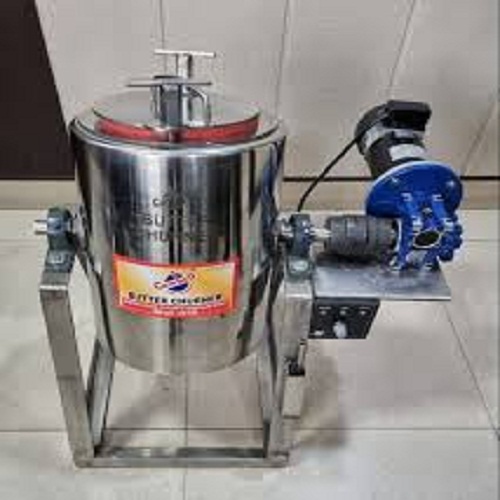
Butter Churner Machine
A butter churner is a traditional kitchen tool used to make butter from cream by agitating it until the fat separates from the buttermilk. The process involves churning the cream to the point where the butterfat coagulates, forming butter, and the remaining liquid is the buttermilk. Butter churners have been used for centuries, and though modern machinery has replaced them in commercial butter production, they are still used in some home kitchens, especially in rural areas or by people interested in preserving traditional methods of food preparation.
Types of Butter Churner Machines
Manual Butter Churner Machines:
These machines still require some manual effort, but they are more efficient than traditional hand-operated churners. They usually feature a crank or handle to operate a paddle or dasher inside the churn. Manual butter churner machines are compact, easy to use, and suitable for small-scale butter production.
Electric Butter Churner Machines:
Electric butter churners are the most common type used today, especially in households and small-scale dairies. These machines use an electric motor to agitate the cream, significantly reducing the time and effort needed to make butter. They come in various sizes, from small countertop models to larger, industrial-grade machines for commercial use.
Automatic Butter Churner Machines:
Automatic butter churners are designed for large-scale commercial use. They have automated systems for adding cream, controlling the churning speed, and separating the butter and buttermilk. These machines often come with advanced features like temperature control, speed adjustments, and automatic draining of buttermilk, making them ideal for dairy producers.
How a Butter Churner Machine Works
Cream Addition: The process begins by adding fresh cream to the churner’s container. The cream should be at the right temperature (usually just under room temperature) to ensure efficient butter formation.
Churning: The machine’s motor or manual mechanism stirs or agitates the cream. This agitation causes the fat molecules in the cream to clump together, eventually separating from the buttermilk.
Butter Formation: After churning for a set period, the butter will form as a solid mass, and the liquid (buttermilk) will separate. The butter may need to be rinsed with cold water to remove excess buttermilk.
Draining and Kneading: The buttermilk is drained off, and the butter may be kneaded or mixed to remove any remaining liquid. Some machines automatically drain the buttermilk and offer a kneading feature, while in other cases, it may need to be done manually.
Final Butter Product: Once the butter is kneaded and any excess buttermilk removed, the butter is ready for consumption. It can be salted, flavored, or stored in various forms for use.
Features of Modern Butter Churner Machines
Speed Control: Some butter churner machines allow users to control the speed of agitation to suit different types of cream and the desired consistency of the butter.
Temperature Regulation: Maintaining the right temperature during churning is critical to achieving quality butter. Many machines have built-in temperature controls to help manage this.
Capacity: Butter churner machines come in different sizes, with varying capacities. Household models may churn anywhere from a few cups to a gallon of cream, while commercial models can handle much larger quantities.
Automatic Features: Higher-end butter churners may have automatic functions for draining the buttermilk, washing the butter, or even adding salt and flavoring, reducing the need for manual intervention.
Benefits of Using a Butter Churner Machine
Time-Saving: Unlike traditional hand-churning methods, butter churner machines can process cream much faster, reducing the time needed to make butter.
Ease of Use: The motorized action of an electric churner takes the physical effort out of the butter-making process, making it more accessible and less labor-intensive.
Consistency: Machines help achieve consistent results, producing butter with the same texture and quality every time.
Freshness: Homemade butter from a churner machine is fresher than store-bought butter, as it can be made in small batches with fewer preservatives.
Customization: You can control the salt content and add various flavorings like herbs, garlic, or spices to create personalized butter.
Applications of Butter Churner Machines
Home Use: Many people who are interested in farm-to-table practices, homesteading, or traditional cooking methods use butter churner machines to make small batches of fresh butter for family use.
Small-Scale Dairy Farms: Small dairy producers may use butter churner machines to produce fresh butter from their cows' milk, offering it as a high-quality, artisanal product to consumers.
Commercial Dairy Production: Larger-scale dairy producers use industrial butter churners to produce large quantities of butter efficiently. These machines are capable of handling vast amounts of cream and are equipped with advanced features to maintain product quality.
Culinary Enthusiasts: Some chefs and cooking enthusiasts prefer making their own butter to control the flavor and texture of the final product.
Conclusion
A butter churner machine is an excellent tool for anyone who wants to produce fresh, homemade butter quickly and efficiently. Whether you're making small batches at home or running a large-scale dairy business, these machines offer convenience, consistency, and the ability to craft a superior product compared to store-bought butter. With advances in technology, butter churner machines now come in various sizes and offer features that cater to both personal and commercial butter-making needs.
Enquiry Now