

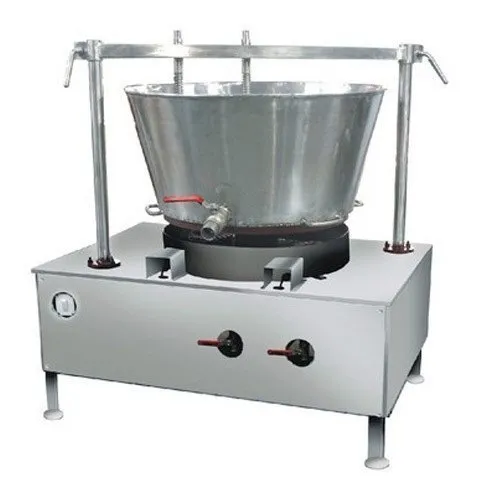
Khoya Making Machine
A Milk Khoya Making Machine is an industrial-grade machine used to automate the process of making khoya (also known as mawa), a traditional dairy product widely used in Indian sweets and desserts. Khoya is made by reducing milk to a solid form through evaporation, and this machine helps in efficiently carrying out this process on a large scale. By reducing the need for manual labor and improving consistency, the khoya-making machine is an essential tool in dairy and sweet-making industries.
Key Functions and Purpose:
Milk Reduction: The primary function of the machine is to reduce milk by evaporating the water content, leaving behind a concentrated, thickened mixture that forms khoya. This process is usually carried out by boiling milk at a controlled temperature to allow for evaporation.
Automation: The machine automates the entire khoya-making process, reducing the need for constant supervision and manual stirring. This not only improves efficiency but also ensures a consistent quality of khoya every time.
Uniform Texture: The machine ensures that the khoya produced has a uniform texture, free from any lumps or irregularities, which is crucial for making sweets like peda, barfi, and other traditional Indian desserts.
Energy Efficiency: The machine is designed to use heat efficiently, allowing the milk to be reduced quickly without wasting energy, making the production process more economical.
Hygienic Processing: The milk khoya-making machine is designed to meet hygiene standards, ensuring that the milk is processed in a clean environment, free from contamination, and adheres to food safety regulations.
Components of a Milk Khoya Making Machine:
Heating System: The heating system is responsible for raising the temperature of milk to the point where evaporation begins. This system can use electric or steam-based heat sources, depending on the design.
Stirring Mechanism: The machine includes an automatic stirring system that continuously stirs the milk during the heating process. This helps prevent milk from sticking to the bottom and burning, ensuring an even consistency in the khoya.
Evaporation Chamber: This is the core of the machine where milk is boiled and the water content is evaporated. The evaporation chamber typically has a thick base and an efficient system to allow moisture to escape while preventing milk from spilling over.
Temperature Control: Precise temperature control is crucial for the perfect consistency of khoya. The machine comes equipped with a temperature control system to maintain the ideal cooking temperature, usually between 85-90°C, to prevent burning and overcooking.
Cooling System: After the milk has been reduced to the desired consistency, it is often necessary to cool it before further processing or packaging. Some machines come with a built-in cooling system or allow for the milk to be removed for cooling in a separate unit.
Control Panel: Modern machines are equipped with an easy-to-use control panel that allows operators to set cooking time, temperature, and stirring speed. This panel enhances the ease of operation and ensures precision in the production process.
Draining System (Optional): Some milk khoya-making machines include a drainage system that helps remove excess whey (water) from the milk mixture, improving the texture of the final khoya product.
Steps in the Khoya Making Process:
Milk Heating: Fresh milk is poured into the machine’s heating chamber, where it is heated to a specific temperature. The heat causes the water content in the milk to evaporate gradually.
Continuous Stirring: The stirring mechanism ensures that the milk does not stick to the sides or bottom of the chamber. Stirring is critical for even heating and consistent reduction of the milk.
Evaporation: As the milk is heated, the water content begins to evaporate, and the milk thickens. The process continues until the milk reaches a semi-solid consistency.
Formation of Khoya: Once the milk has reduced to the desired consistency, it forms into khoya, a dense, solid mass. At this point, the heating and stirring processes are stopped.
Cooling: The khoya is then allowed to cool. Some machines have a built-in cooling system, while others require the khoya to be transferred to a separate unit to cool down to room temperature.
Packaging: After cooling, the khoya is ready for further processing, such as molding into shapes or for use in sweets and other dairy products. It can also be packaged directly.
Types of Milk Khoya Making Machines:
Semi-Automatic Milk Khoya Machines: These machines require some manual intervention, such as pouring the milk or monitoring the evaporation process. They are ideal for small to medium-scale production.
Fully Automatic Milk Khoya Machines: These machines handle the entire khoya-making process automatically, from milk heating and stirring to evaporation and cooling. Fully automatic machines are suited for large-scale production and are commonly used in dairy plants and sweet-making industries.
Batch-Type Milk Khoya Machines: These machines process milk in batches, making them suitable for small-scale production or artisan sweet makers.
Continuous-Type Milk Khoya Machines: These machines operate continuously, processing large quantities of milk without interruption. They are ideal for large-scale production environments where high-volume output is required.
Benefits of Using a Milk Khoya Making Machine:
Increased Efficiency: The machine automates the entire process, which significantly reduces production time compared to manual methods. This leads to higher output and better utilization of resources.
Consistency: With precise control over the temperature and stirring, the machine ensures that every batch of khoya has the same texture and quality, maintaining consistency in the final product.
Energy Savings: Efficient heating and evaporation systems minimize energy wastage, making the production process more cost-effective.
Labor Savings: By automating key steps like stirring and monitoring, the machine reduces the need for constant supervision and manual labor, resulting in cost savings.
Hygiene: The machine is designed for easy cleaning and maintenance, helping to meet food safety standards and ensuring that the khoya produced is free from contamination.
Scalability: Depending on the model, the machine can cater to both small and large-scale production, making it suitable for businesses of various sizes.
Applications of Milk Khoya Making Machines:
Dairy Plants: Large-scale production of khoya used in the making of various dairy products, such as sweets and confectioneries.
Sweet Manufacturing Units: For the production of khoya used in traditional Indian sweets like peda, barfi, gulab jamun, and others.
Small-Scale Dairy Farms: Ideal for smaller operations where khoya is produced in smaller batches for local distribution or retail.
Food Processing Units: Used in the processing of milk-based products for the food industry, particularly in the production of sweets.
Maintenance and Care:
Regular maintenance is necessary to ensure the milk khoya-making machine operates efficiently and lasts longer. Key maintenance tasks include:
Cleaning: The machine should be thoroughly cleaned after every use to remove any milk residue or fat that may cause contamination.
Lubrication: Moving parts such as the stirring mechanism and motor should be lubricated regularly to prevent wear and tear.
Temperature Calibration: Ensure that the temperature control system is regularly calibrated to maintain consistent heating and evaporation.
Inspection: Regularly check for any blockages in the draining or heating systems, and inspect parts for any signs of damage or corrosion.
Conclusion:
A Milk Khoya Making Machine is a valuable tool for anyone involved in the large-scale production of khoya and other dairy-based sweets. It automates the process of milk reduction, improves efficiency, ensures consistent quality, and helps maintain hygiene standards. Whether in small-scale operations or large commercial dairy plants, this machine is essential for meeting the growing demand for khoya in the food industry while saving time and labor costs.
Enquiry Now