

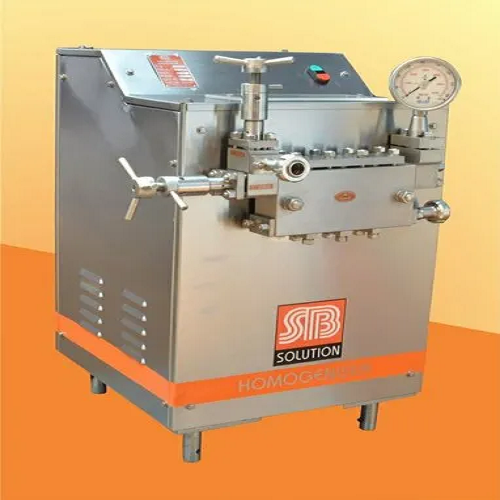
Milk Homogenizer Machine
A Milk Homogenizer Machine is a critical piece of equipment in the dairy industry. It is used to break down the fat molecules in milk, ensuring they are evenly dispersed throughout the liquid. This process is known as homogenization. The goal is to prevent the separation of cream and milk, creating a smooth, consistent texture that enhances the quality of milk and other dairy products.
Key Functions and Purpose:
Prevents Cream Separation: In untreated milk, the fat globules rise to the top, creating a layer of cream. Homogenization reduces the size of fat molecules, ensuring they stay suspended throughout the liquid.
Improves Milk Quality: By breaking down fat particles, homogenization results in a uniform texture, which improves the milk's taste and mouthfeel, making it creamier and more palatable.
Increases Shelf Life: Homogenized milk has better stability and a longer shelf life because the smaller fat particles are less likely to separate over time.
Enhances Nutrient Absorption: Smaller fat molecules allow for better absorption of fat-soluble vitamins, such as A, D, E, and K.
Components of a Milk Homogenizer Machine:
Homogenizing Valve: The central component where milk is subjected to high pressure. The valve forces the milk through small orifices, breaking the fat globules into smaller particles.
High-Pressure Pump: Pumps the milk through the homogenizing valve at high pressures (typically 1500-3000 psi), which is essential for effective homogenization.
Pressure Control System: Maintains consistent pressure throughout the process, ensuring efficient fat particle reduction.
Cooling System: Prevents overheating of milk during homogenization, which can negatively affect milk quality. It helps in cooling the milk to optimal temperatures for better consistency.
Motor and Drive System: Provides the necessary power to operate the pump and drive other moving parts of the machine.
Inlet and Outlet Pipes: Direct the milk into and out of the homogenizing chamber, respectively.
How the Homogenizer Works:
Milk enters the machine: Milk is pumped into the homogenizer through an inlet pipe.
High-pressure passage: The milk passes through the high-pressure pump and then through the homogenizing valve, where it is forced through small openings.
Fat Breakdown: The intense pressure and mechanical forces break the fat globules into smaller, evenly distributed particles.
Exit: The milk exits the homogenizer as a fine, smooth liquid with evenly distributed fat particles, preventing the cream from rising to the top.
Types of Milk Homogenizers:
Single-Stage Homogenizer: The milk passes through a single homogenizing valve. This is suitable for small-scale operations.
Two-Stage Homogenizer: The milk is homogenized in two stages, leading to finer fat distribution. This type is used for larger-scale operations.
Micro-Homogenizer: Used for laboratory or small-scale applications, these machines break down fat molecules to an extremely fine level.
Benefits of Homogenization:
Smooth Texture: The milk becomes smoother and creamier, improving the mouthfeel.
Improved Taste: Even distribution of fat results in a more consistent and pleasant taste.
Longer Shelf Life: Homogenized milk has a longer shelf life because of its consistency.
Better Nutrient Absorption: Smaller fat particles make the absorption of fat-soluble vitamins easier.
Applications of Milk Homogenizers:
Dairy Industry: For the production of milk, cream, butter, and other dairy products.
Food Industry: Used in products like mayonnaise, sauces, and dressings that require a smooth, stable consistency.
Pharmaceuticals and Cosmetics: Homogenization is also used in the production of lotions, creams, and other emulsions.
Maintenance and Care:
To ensure the milk homogenizer operates efficiently, it requires regular cleaning and maintenance. This includes:
Cleaning the system to remove milk residues, fats, and bacterial buildup.
Inspecting the homogenizing valve for wear and tear.
Lubricating moving parts to prevent mechanical failure.
Checking for leaks and replacing seals to maintain pressure and efficiency.
Conclusion:
A Milk Homogenizer Machine is essential for producing high-quality, uniform milk products. It helps maintain the texture, taste, and stability of milk, ensuring that it meets the high standards expected by consumers. Whether in large-scale dairy plants or small-scale production, homogenization is a key step in the modern dairy industry.
Enquiry Now